Meeting Saturday January 18th

“Hearing loops will do for hearing instruments what WIFI does for laptops.” Dr. David Meyers

hearing loop

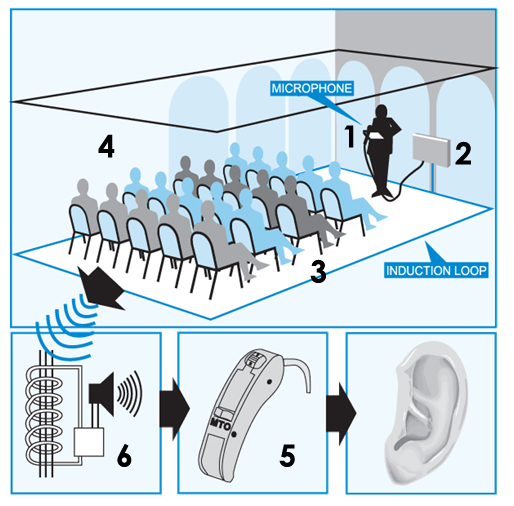
Our next meeting is Saturday, January 18, 2014 from 9am-11am. Our topic will be hearing loops and it will be held in the newly looped room in the Sanderson Center, classroom B/C. Your hearing aid is specifically programmed with for your hearing loss and switching to T-coil (the telephone switch) will deliver clear sound right to your hearing aids. If you’ve never experienced the technology, now is your chance to discover the difference.

My personal hearing loop experience is it gives me almost normal hearing again in group situations. Gone is the background noise and distance which interferes so much with in my typical hearing aid program. Normally I rely on CART (real time captioning) to get me through meetings but with the loop, CART is backup. I can look down to write and still hear the words being said. In the Sanderson Center set up, we have microphones set up on the tables which means I also hear all the comments as well. That does not happen without the loop for me.

Our meeting will cover ADA compliance which changed in 2010, talk about hearing loop standards and the difference between a loop and other assistive listening devices. Come find out why this technology is so awesome and why we need to build awareness of the loop in Utah. Find out about the little steps we each can take to get venues looped so we can get out there and start being social again.

Local HLAA Members Advocate

Local HLAA member Michael Shelton helped advocate for captions at sporting events at University of Utah.  Here’s a letter he wrote to officials expressing his gratitude for making the event accessible to the hard of hearing…

Last Saturday I went to the Utah vs BYU basketball game at the Huntsman Center.  I had two of my sons with me visiting from out-of-State and I proudly pointed out to them the captioning on both sides of the arena.  I have to honestly say, I never realized how much I missed not hearing the announcements!  It was so awesome being able to look up at the caption after there was some call or a comment made regarding the game.   I consider myself pretty basketball savy and yet being able to read the announcements added so much more to my understanding and enjoyment of the game.
As to the captioning, what I liked was that it is visible for all (hearing or non-hearing alike) and, therefore, not requiring any effort or time checking out an auxiliary device.  What I assume and hope in the future is that the captioning will become a part of the score board, positioned in the center of the arena, so we don’t have not to look away from the action to view the captioning.
The addition of the captioning is truly a great day for the deaf and hard of hearing!  Please convey our heart felt appreciation to all those who have cared and worked so hard to make this possible.
Sincerely,
Michael Shelton
Utah-CAN
You too can make a difference in your community in regards to accessibility.  For more information visit: http://www.utah-can.org

Brad Ingrao on Hearing Loss and the Holidays

National HLAA held another webinar last Wednesday night featuring Brad Ingrao. This is the bio posted on the website: “Brad is an audiologist, Tweeter, freelance technical illustrator, writer, lecturer and technology geek. He has been a long time friend of HLAA and has logged many hundreds of hours on professional and consumer listservs related to hearing loss over the last 15 years.

Dr. Ingrao is a consultant for the Rehabilitation Engineering Research Center on Hearing Enhancement at Gallaudet University. This grant funded program supports Dr. Ingrao’s regular column in Hearing Loss Magazine.”

His topic was focused on how to improve the holidays gathering with hearing loss.

People with hearing loss, Brad said, are shortchanged when it comes to the holidays. We often travel for holidays which leaves everyone tired, hearing loss or not. When we get there, we too want to catch up with all the people we don’t normally get to see, cramming in conversations over a short period of time. With the background noise, people talking over one another and music, we tire out faster perhaps becoming agitated. Plus, being out of our environment means we lose control. We can’t control schedules, music/TV settings, rooms/acoustics or arrange for people to talk one at a time. It’s a downward spiral from there.

Many people still hide their hearing loss, afraid of being ‘outed’ as hard of hearing. How do we do we cope? We can either come out as hard of hearing or we can continue to bluff. We can become the constant talker so we don’t have to listen to others. Brad says the payoff is 100 times greater to say, “I need this to hear.” They are our family and they want us to hear them and they will, hopefully, help us. So how can we improve the situation?

  • Be honest – Accept your hearing loss and avoid bluffing. Find a way to be at peace with your hearing loss. Disclose your hearing loss and know what helps you hear better.
  • Educate – Educate yourself and your loved ones about your type of hearing loss.
  • Be Prepared – Get a hearing aid tune up before you go. Have a professional cleaning done. Get a ‘speech-in-noise test done. Set your directional microphones in your hearing aids. Have lots of batteries with you and insert fresh ones just before that important event so you’re not stuck in changing batteries in the middle of it. Use a humidifier.
  • Take Control – Make an itinerary. Plan ahead. Arrive early. Identify a rest spot. Pick your best listening spot. Be proactive.
  • Conserve Energy – Rest. Take hearing breaks. Cut your losses and move on when needed because sometimes it’s just too difficult.
  • Give Feedback – Acknowledge the effort of others. Suggest ways to make things better next time. Offer support to others who have hearing loss too.

Next, Brad went over three typical holiday scenes. First he pulled up a picture of a holiday dinner table seating 8 people. One end featured huge windows and he suggested staying away from those because of the reverberation. Also stay away from the ends of the table. Pick seats in the middle of the table that way you can catch what’s being said on either side. The reality is you won’t hear it all but in this position you have a better chance to hear more.

Next he pulled up a cocktail party scene. To talk to someone in this kind of event, get away from the main crowd and find a corner. Try to find something sound absorbing such as curtains, a rug and/or big puffy chairs.

At a place of worship, go early and sit upfront or call ahead and ask to reserve a seat upfront. Ask if they have ALDs or take your own. He briefly covered ALDs and which ones he liked before closing for a question and answer session.

Merry Christmas everyone and I hope these tips help you with your holidays.

merry christmas

HLAA holds monthly webinars. The webinars are captioned, show the person presenting and their power point presentations as well. They are free. For a schedule of topics and information on how to sign in, go here: http://hearingloss.org/content/webinars

HLAA National Webinar with Sam Trychin

Last night HLAA presented a webinar featuring Sam Trychin. This seems to be a huge topic for those with hearing loss and even next months webinar deals with holiday headaches. Sam is a psychologist in private practice and provides consulting services to stairways behavioral health. Sam serves as the proceed if heal advisor to HLAA in the area of mental health. To view his website, go to http://www.trychin.com.

Holidays are tough, Sam says. Family members don’t know how to help us or if they do, they sometimes get caught in a conversation and forget we need a little help. He suggested a number of things to help which he called 8 Key Strategies for surviving the holidays and having a good time.

  1. Write notes or letters ahead of time to explain what helps you to be included.
  2. Place what to do signs around the house, such as “Don’t talk to Sam’s back.” “Slow down a little when you talk to Sam.”
  3. Wear a T-shirt with communication guidelines. He showed his holiday shirt with the 12 communication guidelines on the front and Happy Holidays and two ears on the back. Make it fun, he recommended. (Basic communication tips from HLAA, scroll down, not sure what his 12 are but this is an example.)
  4. Make appointments to catch up with family. If you haven’t seen a family member in a long time and they come to the gathering, ask him/her to schedule some time out for just the two of you.
  5. Anticipate difficulties. Think about where you are going such as the acoustics and what you can do to prevent problems like taking an ALD.
  6. Use relaxation techniques before and during the family gathering. (Susan brought this up at our last chapter meeting and gave a few exercises.)
  7. Use assistive listening devices (ALDs). They can make a big difference. A comment at the end of the webinar was that a lady felt embarrassed to be wearing one. Sam’s commented everyone wears something on their ears these days so we shouldn’t be embarrassed about what’s on ours.
  8. Smile a lot. Smiling triggers positive neurochemistry. It helps reduce stress.

A sense of hearing is essential to survival. Sounds travel faster to the brain than any other sense. Hearing loss shorts our ability to tune into auditory information provided by the environment, that can produce a kind of chronic level of tension and anxiety. Our family members also feel this tension, worrying about us hearing what we need to survive, like not stepping into traffic because we can’t hear what’s behind us. With our reduced sense of hearing, it’s important to stay within our environment in other ways. Here are 6 Key Strategies and Tactics to stay involved:

  1. Use ALDs
  2. Use alerting devices.
  3. Practice mindfulness and relaxation techniques to increase attention and alertness to external events. The calmer we are, the better we can pay attention.
  4. Fine tune our visual capacities. He suggested playing visual games to increase the powers of observation, even computer games.
  5. Anticipate environmental changes, from room to room, from house to car. Environments change.
  6. Get lots of sleep, rest and exercise with a proper diet.

Holiday dinners cause those with hearing loss social pain. We feel different and have little connection so we also feel like we don’t belong. We appear chronically irritable in these situations so we tend to want to avoid them but this escape is potentially dangerous. Avoidance works in the short term but in the long run it equals depression, loneliness and early mortality. A lot of times is the source of the problem is not the hearing loss. It’s not knowing what to do to prevent or reduce communication breakdowns. Sam says, “Find a support system!” Find a hearing loss chapter and go because you can reduce communication issues.

Sam gives another list tactics to avoid communication breakdowns:

  1. Learn to identify the cause of communication problems.
  2. Learn and practice guidelines to prevent/reduce communication problems.
  3. Identify and change unhelpful reactions
  4. Model your communication needs (our own Kathy is an excellent example of this).
  5. Increase awareness of body reactions.
  6. Catch yourself in automatic reactions to stress.
  7. Use this to enjoy the holidays.

The key to all this is practice, practice, practice Sam tells us. Practice especially the relaxation techniques like deep breathing in the car and smiling. “The simple act of smiling just changes what’s happening in your brain.” Then he recommended a book and DVD called “Relaxation Training” and the DVD is captioned.

The webinar drew to a close and he took a few questions from the audience. All in all, the hour went fast! It included a power point presentation making it easy to follow and a chat box to be able to ask questions. All of it was free.

The next webinar features Brad Ingrao on December 18 from 6pm-7 mountain time. He has a column in the HLAA Hearing Loss magazine. His topic will be The Gift of Hearing: Technology and Tips to Reduce Holiday Hearing Headaches.Description: Brad Ingrao, Au.D. has been using enabling technologies since the mid-1980s. As an early adopter of computer technology in audiology, Dr. Ingrao is recognized, and has served as a subject matter expert for several multinational hearing aid, audiology diagnostic equipment and hearing industry software companies.

Stress Management for the Holidays

Thank you to those who attended last Saturday’s meeting, it was good to see our regulars and a few new faces.  Gift bags were given to attendees as a show of appreciation.  Thank you Donna and Mike for taking time to put them together.  Special recognition went  to Julia Stepp for going above and beyond CART, helping us whenever she can and to Susan Chilton for leading our interactive meetings getting us in touch with our support group efforts again.

A few new faces


our regulars

Susan led the meeting on Stress Management for the Holidays.

Susan Chilton with CART

She had a lot of practical advice for the everyday person such as cutting back on traditions or delegating tasks to family.  Other suggestions were to get outside in the sun for a walk or get regular exercise. Treat  yourself to a massage or ask a family member to trade foot or hand massages.  As hard of hearing it’s important to place yourself at your best vantage point around a holiday table.  Sit by a sympathetic family member who will help you hear, try for a corner position at the table to help reduce acoustic problems.

Other news: Hearing aid batteries can be recycled with your local CostCo audiologist.

Look for coming socials between HLAA meetings.  Socials will be announced here and on our yahoo email list.

Our next meeting date and topic will be announced soon, stay tuned!

Stress Management During the Holidays

The holidays are happy times but they can also be stressful. We overeat, we over spend, we say yes when we should say no. I remember a time when my ex-husband asked me to wait to shop for Christmas and finally gave me the go ahead the 23rd of December to shop. I remember sitting down on a bench in the middle of Wal-Mart crying my eyes out in a sea of people. Never had I waited so long to shop and I never did it again. That’s one example of typical holiday stress for everyone.

Having a hearing loss on top of it adds that much more stress. Music blares from speakers in every store, the extra people and chatter with all the check out counters open with beeping cash registers create a cacophony of noise to my ears. With my hearing aids, I find myself clenching my teeth trying to put up with the extra clamor. Without my hearing aids, I shop in peace but I also don’t hear what people say to me either.

Then there’s the big family dinner where everyone seems to be talking and enjoying the conversation but the hard of hearing person feels alone in the midst of family. We want so much to be a part of it all; the jokes, the stories and the family gossip but it’s impossible. And it hurts when we miss something, especially when a relative gives us the ol’ “Never mind, it’s not important” or our significant other tells us, “I’ll tell you later,” and later never comes.

If all this sounds familiar to you, come to our next meeting, this Saturday 9am-11 at the Sanderson Center. Our topic is “Holiday Stress Management.” We will be in the Conference Room (looped room was already reserved darn it!), we have CART (captions) and the FM system.

In the meantime, here’s a few links to check out:

Arlene Romof, holiday tips for the hard of hearing:  http://www.hearingloss.org/sites/default/files/docs/Holiday_MadnessRomoff_ND08.pdf

Tips for surviving holiday stress:  http://psychcentral.com/blog/archives/2012/12/23/9-tips-for-surviving-holiday-stress/

happy holidays

Hearing Loop in the News

Loop Utah was interviewed in the Salt Lake Tribune.

Want to learn a little more about loops?

Want to know what the difference is to a hearing aid user? (Our very own Kristel Scoresby was interviewed.)

Then check out this article….

http://www.sltrib.com/sltrib/money/57001349-79/loop-hearing-system-technology.html.csp

Be sure to read the comments and add one of your own to let people know that hearing loss accommodations are needed.  The more we keep hearing loss in the news the better we reach out to others, hearing and hard of hearing.

Looping News for Salt Lake

Loop


Great news! Classroom B/C is now looped for our listening pleasure.  If you have a t-coil in your hearing aids, come experience this incredible technology at our next HLAA chapter meeting on November 16th.

I tried a loop system for the first time a few years ago at the HLAA Convention in Rhode Island.  I could not believe how well I heard with the loop.  I didn’t think I could ever hear that well again.  I’m so very happy to have this available to use at the Sanderson Center for the Deaf and Hard of Hearing and I’m excited to share it with you.  (If you’re not sure if you have t-coil, you’re audiologist can help you.  Most hearing aids have them but the program might need to be turned on.)

Loop Utah is Getting the Word Out

Last Thursday, Loop Utah met in the Salt Lake County Government Center giving two presentations on Loop Technology to area architects, technology managers and facility managers.

county meeting

county meeting 1

Cory Schaeffer led two presentations, giving an overview of assistive listening devices available for public venues, legislative compliance and talked about what hearing loss is like, giving visual and auditory examples.  An auditory sample of what a New York subway booth sounded like to a hearing user normally and the huge difference it makes through a loop system.  Here’s the link to see for yourself: Hearing Loop Demo on YouTube.

The presentation concluded with how the loop works, what are the considerations for venues, best practices for hearing loops and the estimated cost of hearing loop systems.  A question and answer session followed along with letting people try the loop themselves with a receiver.  People took note and the information was well received.

Rice-Eccles Stadium Now Captioned

Written by Joshua Jackson of Utah-CAN

Did you have a hard time hearing those refs with all that cheering and boos during the games, or game plays, or announcements that go on throughout the games? I do and many people at the games do. It is not only the deaf and hard of hearing that struggle, there are hearing folks who struggle as well! I am happy to announce the University of Utah Stadium/Venues are now offering captions!

I am a season ticket holder for the Utah football games and am proud that I have had captioning for the first 3 games. They are using a mini tablet for the time being and plan to add a small LED board just for captioning on the northeast corner of Rice-Eccles Stadium midway of this season. After that, they are hoping to see a brand new Jumbotron in the next year or 2 that will also have a permanent spot for captioning. Exciting news!

As far as the tablet, there have been some issues and I am working closely with the folks at Rice-Eccles Stadium with any problems I come across with them. They have been very responsive and I feel like they are working their hardest to get it working flawlessly. When the captions work, it is incredible to know exactly what is going on and it has turn out that the fans surrounding me have found the tablet useful when they do not hear something going on during the game, they would be asking me what was said on the tablet! This is a big deal for us and I am excited to look forward to the big changes when the install the new LED boards for everyone in the stadium to be able to follow what’s being said throughout the games. So be sure you try to get a chance to go to the Utes football game with captions available and get your tablet from Guest Services on the east or west side of the stadium.