
Author: Chelle
Book Club Nov 19: House Girl
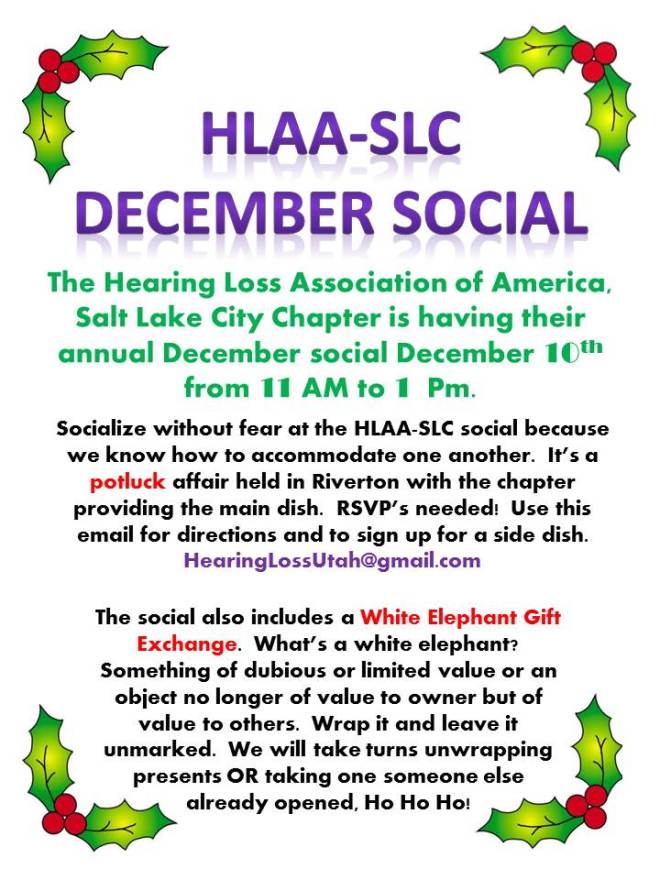
Our next HLAA-SLC gathering will be our book club. The book is House Girl by Tara Conklin.

The Goodreads review says:
“Virginia, 1852. Seventeen-year-old Josephine Bell decides to run from the failing tobacco farm where she is a slave and nurse to her ailing mistress, the aspiring artist Lu Anne Bell. New York City, 2004. Lina Sparrow, an ambitious first-year associate in an elite law firm, is given a difficult, highly sensitive assignment that could make her career: she must find the “perfect plaintiff” to lead a historic class-action lawsuit worth trillions of dollars in reparations for descendants of American slaves.
It is through her father, the renowned artist Oscar Sparrow, that Lina discovers Josephine Bell and a controversy roiling the art world: are the iconic paintings long ascribed to Lu Anne Bell really the work of her house slave, Josephine? A descendant of Josephine’s would be the perfect face for the reparations lawsuit—if Lina can find one. While following the runaway girl’s faint trail through old letters and plantation records, Lina finds herself questioning her own family history and the secrets that her father has never revealed: How did Lina’s mother die? And why will he never speak about her?
Moving between antebellum Virginia and modern-day New York, this searing, suspenseful and heartbreaking tale of art and history, love and secrets, explores what it means to repair a wrong and asks whether truth is sometimes more important than justice.”
We will meet in the looped room, classroom B/C, at the Sanderson Center from 10 AM to 11:30. CART will be available for the meeting, please join us!
Advocacy Resources
HLAA-SLC met yesterday from 10a-noon at the Sanderson Center for the Deaf and Hard of Hearing. Our topic was Asking for Accommodations. Kathy led the discussion talking about; the difference kinds of advocacy, finding the right person to ask to receive accommodations and filing complaints where needed to enforce the ADA.

Here’s the list of advocacy resources she passed out to everyone.
Advocacy Resources
Federal Communications Commission – FCC
- Website: https://www.fcc.gov
- Regulate interstate and international communications
- Television
- Radio
- Wire
- Satellite
- Cable
- Telephone
- Internet
- Establish policy
- Process Complaints
- See For Consumers tab for most of our needs
- Find details by using Search box
- Try typing in Hearing Loss and see what comes up
- Closed Captioning problems? See the FCC VPD registry (Video Programming Distributor) at http://esupport.fcc.gov/vpd-search/search.action#scrollThere to see how to contact the offending station or company.
Utah Division of Occupational and Professional Licensing
- Website: http://www.dopl.utah.gov/
- Look for File a Complaint in the Online Services box (pink).
- Notice that there are standards, statutes and rules for both Audiology and Hearing Instrument Specialists. Applicable laws are linked to their pages.
- Notice the requirements for selling hearing aids at http://le.utah.gov/xcode/Title58/Chapter41/58-41-S17.html?v=C58-41-S17_2015051220150512
Americans with Disabilities Act – ADA
-
Website: https://www.ada.gov/
-
Try searching for specific areas of interest
-
Captions
-
Assistive listening
-
Auxiliary aids
-
- The Department of Labor’s Office of Disability Employment Policy (ODEP) provides publications and other technical assistance on the basic requirements of the ADA. It does not enforce any part of the law.
- In addition to the Department of Labor, four federal agencies enforce the ADA:
- The Equal Employment Opportunity Commission (EEOC) enforces regulations covering employment.
- The Department of Transportation enforces regulations governing transit.
- The Federal Communications Commission (FCC) enforces regulations covering telecommunication services.
- The Department of Justice enforces regulations governing public accommodations and state and local government services.
- Good interpretations of the law can be found with Google searches
- Americans with Disabilities Act, theaters
- Americans with Disabilities Act, hospitals
- Americans with Disabilities Act, hotels
- Etc.
Air Carrier Access Act
- Websites: http://airconsumer.ost.dot.gov/ACAAcomplaint.htm , http://airconsumer.ost.dot.gov/publications/disabled.htm
- Ask for the airline’s Complaint Resolution Officer when your needs are not met.
- File a complaint after the fact with the airline and the Department of Transportation.
Zoo, Education and Parks (Salt Lake County funding from tax dollars)
- Who receives funds? See http://slco.org/zap/who-receives-zap-funds/
Resources for talking points – then add your own story or experience:
Hearing Loss Association of America (HLAA) at http://hearingloss.org/
American Speech-Language Hearing Association (ASHA)
- Website: http://asha.org/ (especially under The Public in the orange box)
American Academy of Audiologists at http://audiology.org
Asking for Accommodations: Oct 15, 2016
Asking for Accommodations
One of the difficult aspects of having a hearing loss is asking for the accommodations we need to be included in whatever we are attending. Whether it is a weekly bridge group, a family dinner, worship services, a political debate, a theater production, a television or internet broadcast – we need help to participate in a way that is meaningful to us.
Our HLAA meeting this week will help you phrase those requests in ways that are most apt to get you the results you want with the good-will you need. We will spend part of the time composing our personal requests, so bring your laptop or tablet to make that easier for you to do – we’ll also have paper and pen available for everyone. Kathy Evans is the presenter.
If there are specific questions that you would like her to address, please email us ahead of time so they can be included in the examples. (hearinglossutah@gmail.com)
Our meeting is Saturday, October 15 from 10 AM to Noon. We’ll be in the Conference Room at the Sanderson Center, 5709 South 1500 West, Taylorsville. We’ll have light refreshments and time to visit with each other, too.
Hope to see you there!
Auditory Fatigue
Susan Naidu came to our last HLAA-SLC meeting to talk about auditory fatigue, also called listener fatigue and cognitive energy fatigue. She is a professor of audiology at the University of Utah. She works with patients in the clinic, trains graduate students to become audiologists and her favorite thing to do is aural rehabilitation therapy. She was happy to talk about auditory fatigue because “it’s a very real phenomenon, it’s a real condition but it’s not discussed much and not researched enough.” It isn’t clinically recognized but many professionals are familiar with it.
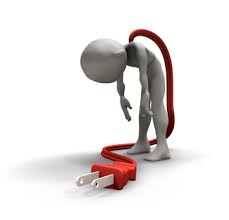
Auditory fatigue doesn’t mean people are dumb because they can’t listen, it’s the “energy it takes to fulfill the complexity of listening because listening requires more to go on in your brain in order to comprehend what you’re listening to.” Ian Noon wrote about this in his piece on the Limping Chicken out of the United Kingdom only he called it concentration fatigue. Noon says: “I went to a great conference today. It was riveting and I was hooked on pretty much every word. And then I got home and collapsed on the sofa. I’m not just tired, I’m shattered. I’ve had to turn my ears off to rest in silence and my eyes are burning. I’ve also had about 3 cups of tea just to write this paragraph.”
Susan introduced us to Kathleen Fuller’s work on hearing loss and cognitive energy. Kathleen asks: “How can audiologists better understand and find ways to counteract the factors underlying why listeners may decide to quit participating in activities because it takes too much effort to listen? How can audiologists help listeners to strategically deploy their available cognitive capacity in situations where it is hard to listen? How can audiologists prevent listeners from avoiding situations and withdrawing from social participation because it is too hard to listen?… It’s said we hear with our ears and listen with our brain now we add when and how much effort we expend during listening in everyday life depends on our motivation to achieve goals and attain rewards of personal and/or social value.“
Listening takes effort. It’s not only being able to hear but being able to pull all the components together to communicate properly. It’s being able to understand language, generating an appropriate response and being able to keep it going back and forth to make a conversation. Usually people aren’t just listening either, they are multitasking; washing the dishes, walking, watching TV, etc.
For those with hearing loss it takes even more effort. Not only are they taking in the above but they are trying to decode the message. Add in being visually aware to compensate such as speechreading and body language. The mind races to fill in the blank spots in words and conversations which involves guess work. Hopefully it matches the context of what they did hear. The mental process is “I’m not hearing well enough. I have to do something and physically push the brain to listen better.” After an hour (or less) these people are really tired and experience discomfort, pain and numbness.
What makes listening even more difficult? Noise, it’s the number one complaint for those coming into Susan’s clinic. Trying to filter and ignore noise makes listening harder for hearing people and difficult for the hard of hearing. Even with modern technology in hearing aids such as directional microphones and noise reduction programs noise remains a problem. Restaurants are an example, bars and traffic. (Hearing in cars has never been easy!)
What other things become hard with this much cognitive energy being spent? Remembering things get harder because with so much going on in the mind already, it’s hard to find a place to stash the information. People may have a hard time remembering names because there’s more focus to understand what’s being said. While in a meeting they can be so intent on understanding the words as they are being said that half the meeting information is forgotten.
Because of the intense concentration, hard of hearing employees end up taking more days off because the mental stress affects their bodies causing actual illness. Or to balance out, they stay home evenings and weekends to recuperate. For those who don’t work, many tend to withdraw because it’s too much work going to that party, the play or lecture. It’s easier to stay home and watch TV with captions. It’s not worth it in the end, the struggle is too much.
Mohan Matthen is studying why some hard of hearing people are more successful at socializing than others. He thinks it might be a pleasure factor. When audiologists diagnose hearing loss and fit people with hearing aids they tend to talk about adverse conditions. What if they talked about positive things instead? If a person can exhibit more pleasure in the role of listening they might be more relaxed and less stressed out. Once it becomes pleasurable their listening effort seems to be reduced. No matter how hard it seems, seek listening enjoyment. Make it fun and shoot for positive because the reward will be “I will understand.”

So what helps combat this fatigue?
Advocating helps a great deal. What do you need to make this meeting better? CART (live captioning)? Sitting closer to the presenter? Assistive listening devices? One speaker at a time? Don’t talk while multitasking? There’s a lot to be said for planning ahead as well. Think about the environment, talk to the event coordinators, find out if the venue has assistive listening devices such as the CaptiView at theaters or live captioned performances. If you’re going to a lecture/workshop/convention, talk to those in charge well in advance to see what might be set. Some people report learning speechreading has helped lighten their fatigue. Visiting with people a few at time instead of large groups. Limit interruptions, have a quiet room to talk to family members at large gatherings. Ask for background noises (music or TV) to be turned down or off. Go outside to eat because break rooms usually have lousy acoustics. Take hearing breaks and read instead of watching TV. Arrange for hand signals when conversation needs to be slowed down or when wanting someone to talk louder. Find out what works for you and advocate for yourself. It’s okay to experiment with it all.
HLAA-SLC thanks Susan for coming to present at our meeting. We had a large group of people and good conversation. There are more links and ideas to follow below in regards to auditory fatigue.
We have bi-monthly regular meetings. The next meeting is October 15th and will be on letter writing for advocacy at the Sanderson Center to the Deaf and Hard of Hearing from 10am-Noon. Do you have something you’d like to approach with the Utah or national legislature? Let us know what your questions and we will make sure it gets into the meeting. We will have more information on that soon.
Speaking of making listening pleasurable, HLAA-SLC has a book club that meets between regular meetings. All meetings have CART (live captioning) to make it less effortful and more enjoyable. Give it a try. We meet September 24th from 10-11:30 am at the Sanderson Center in classroom B/V with the hearing loop. The book selection is I Am Malala. She is the girl who was shot by the Taliban for going to school. This caused her to lose her hearing, so part of the story concerns her cochlear implant. There are two editions of this book, one is for young readers; we’re doing the other one, which is co-authored by Christina Lamb.
Studies done on prolonged exposure to audio stimulus (for those who want to go deeper). This phenomenon occurs after an an extended period of time listening to speech and happens to hearing people as well. Hearing people have more problems than expected which might be related to an auditory processing disorder. Susan said those with hearing loss all have auditory processing disorders.
Richard Gurgel is studying the relationship of hearing loss and dementia. Are individuals with diagnosed mild dementia experiencing decline in auditory processing? Older individuals who have hearing loss but didn’t have hearing aids showed improvements once aided, not just in quality of life but in skills. People were thinking they had dementia when they didn’t.
Starkey on listening fatigue.
Amplification study. Amplification has limited improvement for those with a steep slope high frequency hearing loss.
Susan recommends the LACE (Listening And Communication Enhancement) Program, it improves listening skills.
More publications by Mohan Matthen on hearing loss and displeasure.
Assisting Individuals With Hearing Loss Who Experience Auditory/Listening Fatigue
Whether an individual has had hearing loss their entire life, or their hearing loss has been slowly progressing for years, focusing auditory attention to the task of understanding speech can be an exhausting experience. Add a difficult listening situation such as noise, and the experience is made worse. Despite the marvelous benefits received from hearing aids and cochlear implants, listening continues to be “work” for most individuals. Aural rehabilitation therapy consists of therapy that assists individuals in developing their listening skills, but, also, provides counseling tools and compensatory strategies to aid in reducing auditory or listening fatigue and maximize the listening experience. This session will discuss these tools and strategies for reducing listening fatigue, as well as, problem-solving examples of difficult listening situations.

Susan Naidu, guest speaker, is presenting on: Assisting Individuals With Hearing Loss Who Experience Auditory/Listening Fatigue. Susan has been a practicing audiologist for over 30 years. At the U of U, Susan teaches undergraduate and graduate classes in pediatric audiology and aural rehabilitation therapy for children and adults. Additionally, Susan is a clinical supervisor at the U of U Speech-Language-Hearing Clinic and supervises graduate audiology students in aural rehabilitation therapy for children and adults with hearing loss, as well as, the assessment of auditory processing disorders in children and adults and hearing evaluations with children.
When? August 20, 2016
Where? Sanderson Center to the Deaf and Hard of Hearing, 5709 South 1500 West, Taylorsville, UT 84123 in the Conference Room.
For more information email: hearinglossutah@gmail.com
2016 Summer Social
June Meeting a Success!
Thanks to those who showed up at our meeting on the 18th. Hearing loss and humor was a good draw! There were a lot of good shares in the meeting, perspectives on humor and fellowship. Usually we stop presenting around an hour but this time we stayed on topic for the whole two hours of the meeting.
Laine Waggoner said, “Humor is essential when living with hearing loss and the inevitable communication breakdowns we experience. My own sense of humor has served as an invaluable antidote to the endless stress, frustrations and anxiety that I encounter every day.”

Laine’s work made into a book available at the Sanderson Center for the Deaf and Hard of Hearing.
We discovered humor can be tricky. Sometimes we can laugh at the moment and sometimes it takes us time, as in years, to add the humor to the story. Then there is humor which is inappropriate such as someone saying “Huh? What?” repeatedly to us thinking they are being funny.
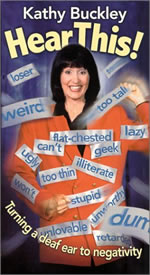
Kathy Buckley is a comedienne who created the autobiographical comedy Now Hear This! about her life which is centered around her hearing loss. She has fun with her hearing loss but she also inspires people to push limits. She’s one we decided who probably didn’t enjoy the things she now talks about when they happened but could apply the humor later.

While Gael Hannan often applies humor in her blog posts. On her website she says: “Hearing loss isn’t funny – but a sense of humour makes living with it easier. OK, there are few laughs in being left out of conversations, not understanding what your child (or your partner, or your boss, or your mom, or your doctor) is saying. In truth, other people find our hearing loss funnier than we do—especially when we say the wrong thing at the wrong time. But take it slow. If you can’t laugh, how about starting with a smile? Then, start learning how to live better with communication challenges. I have grown up with a hearing loss that is now severe to profound, and I’ve been talking and writing about hearing loss for many years.” She has recently published a book called The Way I Hear It.
We had accommodations at the meeting. Julia captioned our meeting and several of us needed those captions. Thank you Julia, we appreciate what you do.

Here are some random pictures taken at the meeting.


Humor in Hearing Loss
“People who live successfully with hearing loss must develop the ability to laugh at their mistakes. This helps to make family, friends and coworkers feel more at ease. Using self-deprecating humor to relieve tension and laughing with others is an expression of kinship or social bonding.” Laine Waggoner
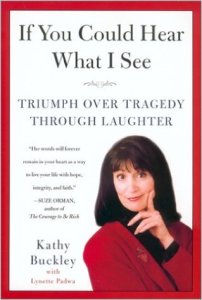
Our next meeting is June 18, 2016 from 10a-Noon at the Sanderson Center in the conference room. Our topic is Hearing Loss and Humor. We will take a look at Kathy Buckley’s book If You Could Hear What I See. Kathy grew up with a severe hearing loss and though her childhood must not have been easy, she looks back over it with sense of humor. She is a stand up comedienne, actress, writer, producer, and humanitarian. She is also a motivational speaker, traveling all over sharing inspiration.
Laine Waggoner dedication a section in her book to humor and hearing loss. The quote at the beginning is from her book, Imperative Information for People with Hearing Loss and their Partners written with her husband Rex Waggoner. We will share some of her insights at the meeting as well.

We cannot leave out Gael Hannan the Better Hearing Consumer from Hearing Health Matters Magazine. She keeps an updated blog writing about the issues those with hearing loss face daily and she often does it with humor.

Afterwards the discussion of these three ladies, we’ll open up the meeting to share our own funny stories. There will be a light lunch and drinks at the meeting so come join us! We’d love to see you.
April Meeting
Our April meeting came and went. Kathy presented on hearing loss and health issues. Behind her is a list of concerns we have with aging and hearing loss.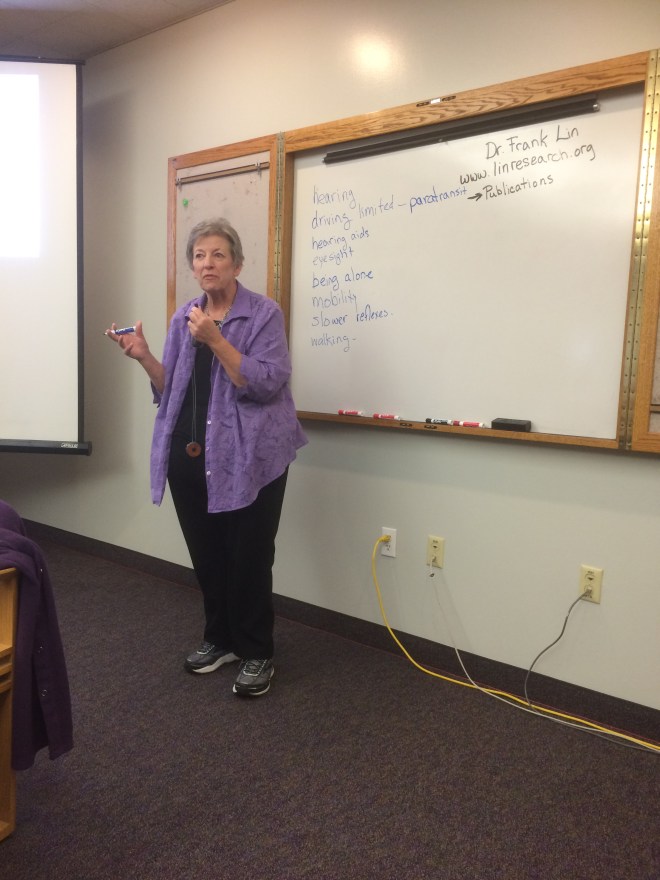
Some of her talk was based on the research by Frank Lin. Here’s a video we watched about Frank’s research before the talk: https://www.youtube.com/watch?v=FfnOxmQThiA The video is captioned and I recommend watching it. We had a good talk, we had a light lunch and socialized before heading home.
Our chapter meets May 21st as the book club in classroom b/c at the Sanderson Center from 10a-11:30. The chosen book is All the Light We Cannot by Anthony Doerr. We have the looped room for the meeting and CART to accommodate everyone and anyone is welcome. Please join us.

Our next regular HLAA-SLC meeting is June 18th from 10a-12p in the conference room at the Sanderson Center. We’ll follow the same format for the meeting; an hour of presentation and an hour of socializing. Our topic is hearing loss and humor. Keeping a sense of humor helps. Come share your favorite stories and find laughter from other stories.
 Hearing Loss Association of America